
 EN




The structure of a jewelry box influences more than the way it looks. It affects the opening experience, internal accessibility, manufacturing process, material usage, storage requirements, and the way the product is revealed to the customer. For brands comparing lid-and-base jewelry boxes with drawer-style packaging, the better choice depends on what the packaging needs to achieve rather than on structure alone.
Both formats can support premium materials and custom branding. The key difference is how the outer and inner components work together. Lid-and-base boxes provide a straightforward lifting motion, while drawer jewelry boxes create a sliding sequence through an outer sleeve and inner compartment. For B2B buyers, comparing the two structures across cost, usability, presentation, and production requirements provides a more useful basis for selection.
Structural Differences That Affect Packaging Decisions
The two structures can both be customized for rings, earrings, necklaces, bracelets, and gift collections. However, their construction leads to different trade-offs in production and customer experience. Understanding these differences before sampling can prevent a buyer from choosing a structure that looks attractive but does not fit the intended use.
How Lid-and-Base Jewelry Boxes Work
A lid-and-base box consists of two main sections that open by lifting the lid away from the base. The structure is familiar, easy to understand, and adaptable to many dimensions. It can accommodate different inserts while keeping the exterior design consistent across multiple jewelry collections.
This format is also flexible from a branding perspective. The lid provides a natural area for logo application, while the interior can use velvet, microfiber, paper-based inserts, or other materials. For brands that need several box sizes under one packaging system, the relatively straightforward structure can simplify customization.
How Drawer Jewelry Boxes Work
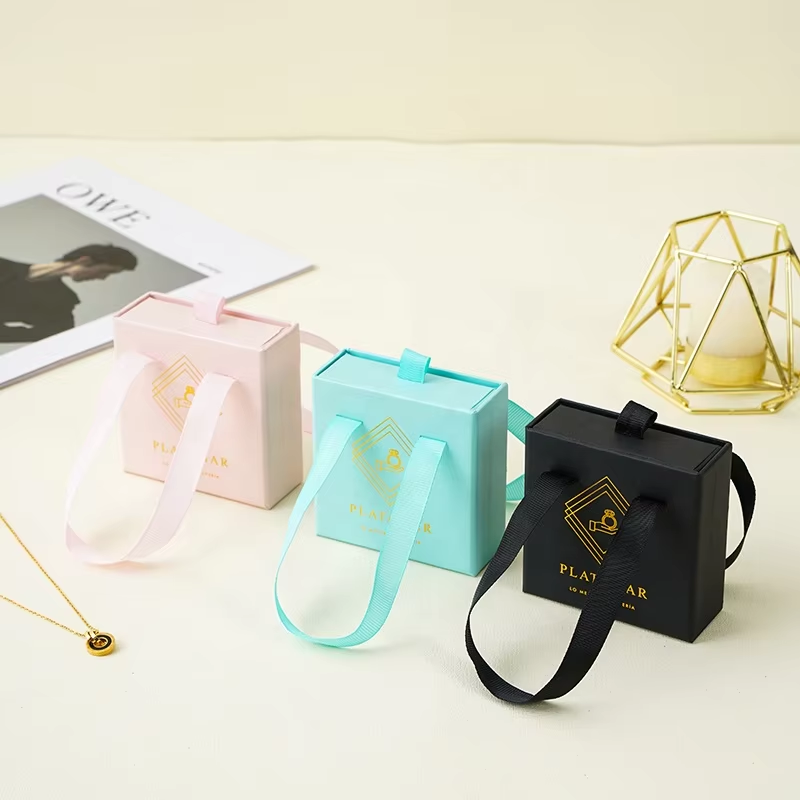
A drawer jewelry box uses an outer sleeve and an inner drawer that slides outward. This creates a more layered opening experience and can make the packaging feel more interactive. The customer sees different surfaces as the drawer moves, creating additional opportunities for branding and presentation.
The sliding mechanism also introduces additional structural requirements. The inner drawer needs to move smoothly while maintaining enough resistance to avoid feeling loose. Accurate dimensions become particularly important because even small fitting differences can affect how the drawer operates.
Comparing Customer Experience
Opening Motion and Accessibility
The opening sequence is one of the clearest differences between the two structures. Lid-and-base packaging requires a simple lift, which makes the product immediately accessible. This can be useful for jewelry that is opened frequently or for retail settings where straightforward handling matters.
Drawer packaging creates a longer opening sequence and can make the product reveal feel more deliberate. This can be valuable when unboxing is part of the brand experience. However, the mechanism also requires the customer to pull the drawer rather than simply lift a lid, so the intended use should be considered before selection.
Premium Perception and Unboxing
Neither structure automatically creates a premium result. Perceived quality comes from the relationship between construction, materials, surface finish, insert, and opening performance. A carefully made lid-and-base jewelry box can feel highly refined, while a drawer box can feel less premium if the drawer movement is loose or uneven.
Drawer packaging can offer stronger potential for layered unboxing because the sleeve, drawer front, and interior can be revealed in sequence. Lid-and-base packaging can provide a cleaner and more direct product reveal. The more suitable option depends on whether the brand values simplicity or a more staged opening experience.
Comparing Production Requirements
Manufacturing Complexity
Lid-and-base jewelry packaging is structurally straightforward, with the lid and base produced to work together as a matched set. This can make the construction easier to standardize across sizes and product lines.
Drawer jewelry boxes involve both an inner and outer component that need precise fitting. The drawer must slide correctly, which means dimensional accuracy becomes particularly important. Buyers should evaluate the additional structural complexity against the intended customer experience.
Assembly and Quality Control
Assembly requirements can also differ. Lid-and-base boxes need accurate alignment between the two sections, while drawer boxes require consistent fitting between the drawer and sleeve.
Quality control for drawer packaging should therefore include repeated opening and closing, checking movement resistance and alignment. For lid-and-base packaging, inspection should focus on lid fit, structural stability, insert placement, and closure performance. The quality criteria should reflect the actual mechanism of each structure.
Comparing Material and Cost Factors
Material Consumption
The amount of material used depends on box dimensions and the chosen construction. Drawer structures include both a sleeve and drawer, while lid-and-base structures use a separate lid and base.
This does not mean one format will always have a lower production cost. Board thickness, paper wrapping, insert design, finishing, and order quantity can have a larger impact on the final quotation. Buyers should therefore compare complete specifications rather than assuming a cost difference from structure alone.
When a More Complex Structure Is Justified
A more complex structure can make sense when packaging plays an important role in the perceived value of the product. For premium collections, the opening sequence may justify the additional construction requirements of drawer packaging.
For larger wholesale programs, buyers may place more weight on standardized production, cost control, and easy handling. In those cases, a lid-and-base structure may be more practical when it delivers the required presentation without adding unnecessary complexity.
Matching Structure to Jewelry Products
Rings and Earrings
Compact jewelry products can work effectively with either structure as long as the internal insert is properly designed. Ring slots and earring supports need to position the products securely and make them easy to remove.
Because rings and earrings usually occupy less internal space, the structure itself may have less influence on protection than the insert. Buyers should focus on the relationship between the product, cavity dimensions, and presentation rather than selecting a structure simply for its appearance.
Necklaces and Bracelets
Necklaces and bracelets require more attention to chain organization. The insert may need hooks, panels, slots, or other support features to prevent movement and tangling.
The choice of outer structure should leave adequate room for the internal system without creating unnecessary volume. For these products, the insert and internal layout often have a greater functional influence than the difference between lifting and sliding the outer box.
Branding Opportunities
Branding on Lid-and-Base Boxes
The lid creates a clear focal surface for a logo or brand mark. Printing, foil stamping, embossing, and debossing can all be applied according to the material and design requirements.
Because the outer structure is relatively simple, brands can create a premium result through a combination of material texture, color, insert quality, and selective finishing. This can be useful for collections that prioritize visual clarity and brand consistency.
Branding on Drawer Boxes
Drawer packaging creates additional visible surfaces. The outer sleeve, drawer front, and interior can carry different elements of the brand identity, making it possible to create a more layered presentation.
This extra space should still be used with restraint. Too many visual elements can make the packaging feel busy and can increase production requirements. A clear hierarchy between the main logo and supporting graphics usually produces a more controlled result.
Storage, Shipping, and Purchasing
Storage and Logistics
The final dimensions of either structure influence carton packing and warehouse space. Drawer boxes may contain multiple structural components that need to remain aligned, while lid-and-base boxes may be easier to stack depending on their configuration.
Buyers should therefore evaluate the assembled packaging together with the outer carton. A structure that looks efficient at the individual-box level may still occupy more volume once packed for shipment.
Wholesale Order Considerations
For wholesale jewelry boxes, purchasing decisions should also consider MOQ, repeat orders, and production consistency. A structure that is ideal for a small premium collection may not be the most practical choice for a large recurring program.
Buyers should compare the structure against sales volume, target unit cost, storage capacity, and expected packaging life cycle. The goal is a competitive balance between customer experience and operational efficiency.
Decision Framework
When Lid-and-Base Is a Practical Choice
Lid-and-base jewelry boxes are well suited to brands that want a familiar opening experience, flexible customization, and straightforward structural design. They can also work well when several box sizes need to follow one consistent packaging system.
This format is particularly practical when the brand wants to allocate more budget to materials, inserts, or finishing rather than to a more complex opening mechanism. For recurring production, its simple structure can also support predictable manufacturing.
When Drawer Style Adds More Value
Drawer jewelry boxes can be a stronger option when the unboxing sequence is a key part of the brand experience. The sliding action and layered surfaces can make the packaging feel more distinctive while providing additional branding space.
The structure becomes more attractive when the product positioning supports a premium presentation and the additional manufacturing requirements fit the purchasing budget. Physical sampling is essential because drawer movement and fitting accuracy directly influence the customer's perception of quality.
FAQ
Which jewelry box structure is more expensive?
The answer depends on the complete specification. Drawer structures can involve additional components and tighter fitting requirements, but board thickness, inserts, finishing, dimensions, and order quantity also strongly affect cost.
Is a drawer jewelry box more premium than a lid-and-base box?
Not automatically. Both structures can support premium jewelry packaging. Material quality, construction accuracy, insert design, finishing, and opening performance all contribute to the final impression.
Which structure is easier to use?
Lid-and-base boxes offer a simple lifting motion, while drawer boxes require the inner compartment to slide out. The more suitable structure depends on whether the brand prioritizes straightforward access or a more layered opening experience.
Which structure is suitable for wholesale jewelry boxes?
The suitable structure depends on product positioning, order volume, target cost, and customer experience. Lid-and-base structures can be practical for standardized collections, while drawer structures can be useful when unboxing is a major part of the packaging strategy.
For a structure comparison based on your jewelry dimensions, target quantity, and desired customer experience, Get a Free Quote.