
 EN




The surface of a jewelry packaging box has only a few seconds to communicate what the brand stands for. A clean logo can make the package look refined, while a poorly chosen printing process can make the same design appear flat or inconsistent with the product inside. This is why brands comparing standard printing with foil stamping should look beyond the question of which process looks more attractive.
The more useful comparison is about application. What kind of artwork needs to be reproduced? How prominent should the logo be? Does the packaging need multiple colors or a metallic accent? How important are small details, production volume, and surface texture? For B2B buyers, the right finishing method depends on these practical requirements rather than on a universal preference.
Choosing a Finishing Method Around the Artwork
A jewelry packaging box often has limited surface area, so every visual element needs a clear purpose. Standard printing is useful when the design depends on color, patterns, illustrations, or larger areas of graphic information. Foil stamping is more focused and can draw attention to a logo, name, border, or selected decorative element.
When Standard Printing Makes More Sense
Printing gives brands greater freedom when the artwork contains several colors or detailed graphics. A packaging design can reproduce a brand color system, illustrations, background patterns, product information, or campaign-specific artwork without turning every element into a metallic feature.
This makes standard printing useful for jewelry brands that want their packaging to match other marketing materials. It can also provide a more cost-effective route when the design depends on color coverage rather than a premium tactile or reflective effect. The final result still depends on the paper surface and production quality, so buyers should review an actual printed sample before approving the full order.
When Foil Stamping Creates More Impact
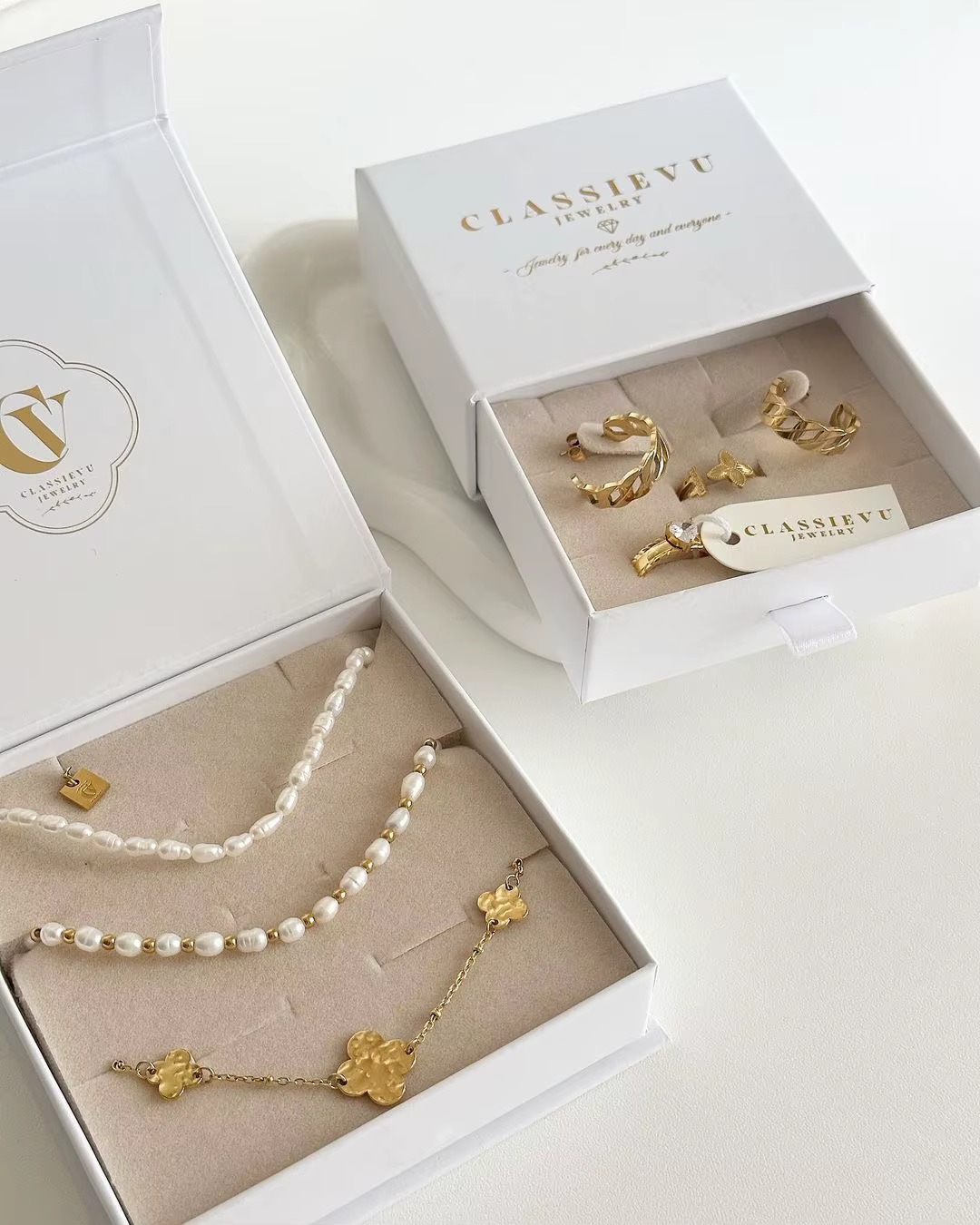
Foil stamping jewelry boxes is most useful when a brand wants selected details to stand apart from the surrounding surface. Metallic gold, silver, copper, and other foil effects can create a stronger focal point for a logo or short brand name.
The strength of foil is concentration. It does not need to cover a large portion of the box to have an impact. A small metallic logo on a textured or dark surface can create a distinct premium accent while allowing the rest of the packaging to remain visually restrained.
Comparing Visual Effects on Retail Shelves
Retail packaging needs to work from a distance as well as at close range. The customer may first notice the overall shape and color before seeing the logo, so the finishing process should support the packaging hierarchy rather than compete with it.
Color Coverage and Brand Recognition
Standard printing is advantageous when color itself is part of the brand identity. A jewelry packaging box can use a consistent palette across several products and maintain recognizable graphics across different sizes.
This is particularly useful when the brand relies on a specific visual system rather than a single logo. Consistent color reproduction can connect the packaging with storefront graphics, websites, catalogs, and product inserts. Printing therefore works well when the packaging needs to carry more visual information.
Metallic Accents and Premium Positioning
Foil stamping creates a different type of recognition. Rather than using color coverage, it creates contrast through reflectivity and surface response. This can make the brand name visible under retail lighting without requiring a large printed graphic.
Foil can be especially effective when the rest of the packaging is deliberately restrained. A premium jewelry packaging box with a simple surface and carefully positioned metallic logo can communicate quality without becoming visually crowded.
How Material Changes the Final Result
The same artwork can look different depending on the packaging material. Surface texture, color, coating, and paper absorbency all affect how printing or foil stamping appears after production.
Smooth Surfaces for Detailed Graphics
Smooth paper surfaces can support clean printed graphics and sharper visual details. They can be useful when the packaging design includes relatively complex artwork or when consistent color coverage is important.
The printer and packaging manufacturer should still consider the actual substrate before finalizing the artwork. Small changes in paper texture or coating can influence color and image definition, so production samples are useful for confirming the intended appearance.
Textured Surfaces for Foil and Tactile Branding
Textured papers can create a more tactile package and may work well with carefully selected foil applications. The surface itself contributes to the sensory experience, while the foil introduces a contrasting metallic element.
The result depends on the texture and the size of the foil details. Fine lettering may require a surface that can preserve enough definition, while larger logo elements may tolerate stronger texture. Buyers should evaluate the actual combination rather than assuming every foil process produces the same result.
Cost, Setup, and Order Quantity
Finishing choices also affect the commercial side of packaging production. Buyers should consider not only the appearance but also the setup involved, expected order quantity, and whether the selected process needs to be repeated across several box sizes.
Understanding Setup Requirements
Foil stamping can require dedicated tooling for the design, while printing may involve its own preparation depending on the chosen process. These setup requirements can have a larger influence on smaller orders than on larger production runs.
For that reason, the same finishing process may make sense for one order quantity and a different process for another. A competitive packaging supplier should be able to compare the full production specification rather than evaluating the finishing technique in isolation.
Balancing Premium Details With Unit Cost
Not every jewelry packaging box needs multiple decorative processes. Buyers can usually identify one or two visual elements that matter most to the brand and allocate the finishing budget accordingly.
For example, a clean printed background combined with one foil-stamped logo can provide both information and a premium accent. This approach can be more cost-effective than applying foil, embossing, and multiple printed layers to every surface without a clear visual purpose.
Combining Printing and Foil Stamping
Printing and foil are not mutually exclusive. In many custom jewelry packaging projects, printing handles the broad visual identity while foil highlights a selected brand element.
Creating a Clear Visual Hierarchy
The combination works when each process has a defined role. Printing can establish color, graphics, and supporting information, while foil draws attention to the logo or another key element.
This makes the packaging easier to read and can create a stronger sense of depth. Buyers should keep the hierarchy simple because the box surface is limited and too many competing details can weaken the overall presentation.
Coordinating With Embossing and Other Finishes
Foil can also be combined with embossing or debossing when the packaging design requires more tactile detail. The embossed structure can create depth while the metallic foil catches light on the selected area.
However, each additional process introduces another production variable. Sampling becomes increasingly important as the finishing specification becomes more complex. The final sample should be judged under the same lighting and handling conditions expected in the retail environment.
Customization Through OEM and ODM Development
When standard printing or a stock foil treatment is not enough, OEM and ODM development can address the packaging at the structural and visual level. This can include box dimensions, material selection, insert design, surface treatment, logo placement, and the overall styling of the packaging.
From Artwork to Production Specification
A custom design should be translated into a production specification before mass manufacturing. The specification should define the artwork, material, finishing process, box structure, dimensions, insert, and any other elements that affect the final result.
This prevents a common sourcing problem in which the visual design is approved but the technical details remain unclear. For brands with multiple sizes or collections, a documented specification also makes future reproduction easier.
Making Custom Finishing Consistent
Consistency matters particularly when a brand uses foil stamping across several packaging formats. Logo size, position, foil color, surface material, and application quality need to remain visually aligned.
The same principle applies to printed packaging. A consistent brand system should survive changes in box size and structure without becoming distorted. OEM and ODM support can be valuable when the packaging needs to be developed as a coordinated product rather than a standard box with a logo added afterward.
A Practical Decision Framework
The choice becomes straightforward when buyers start from the desired visual result. Use standard printing when color coverage, detailed graphics, or a broader visual identity are central to the package. Use foil when the primary objective is to create a focused metallic accent. Use both when the design needs detailed branding plus a premium highlight.
The production side should then be considered. Material, surface texture, order quantity, tooling, artwork complexity, and target unit cost all affect the final decision. A premium finish should feel intentional, while a cost-effective specification should avoid decorative processes that do not contribute meaningful value.
For brands developing custom jewelry packaging for retail shelves, product launches, or recurring collections, providing the artwork and packaging requirements together allows the manufacturer to recommend a competitive finishing configuration. Buyers can then Get a Free Quote based on the actual material, size, finishing process, and order quantity.
FAQ
Is foil stamping more expensive than standard printing for jewelry boxes?
It can involve additional tooling and setup, so the total cost depends on order quantity, artwork, material, and production requirements. A direct comparison should use equivalent packaging specifications.
What is foil stamping jewelry box finishing best suited to?
It is particularly suitable for logos, brand names, borders, and selected decorative details where a metallic effect is desired.
Can foil stamping and standard printing be used together?
Yes. Printing can handle broader graphics and colors, while foil can highlight a specific logo or premium detail.
Does paper texture affect foil stamping?
Yes. Texture can influence reflectivity, edge definition, and the final appearance of the foil. A physical sample is useful before mass production.