
 EN



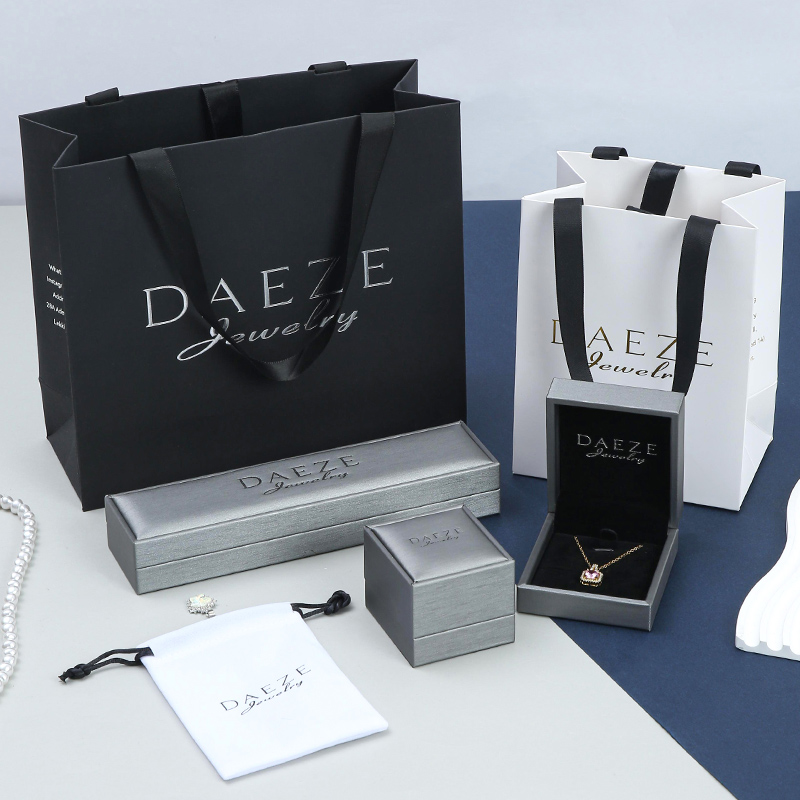
When purchasing bulk jewelry boxes for resale, the lowest unit price is not always the most cost-effective option. A supplier may offer a competitive price at a high minimum order quantity, while another may support a smaller MOQ with a slightly higher unit cost. Which deal creates better value depends on how quickly the boxes will be used, how much inventory the buyer can hold, and whether the packaging is customized for a specific collection.
For jewelry brands, retailers, wholesalers, and distributors, MOQ should therefore be evaluated together with unit cost rather than as a separate purchasing condition. A well-planned order can reduce packaging costs without creating excessive stock, while a poorly planned bulk purchase can tie up cash in boxes that are difficult to reuse. The objective is to find a quantity that supports efficient production without increasing unnecessary inventory risk.
The Real Cost of Bulk Jewelry Boxes
The relationship between MOQ and unit price becomes clearer when the whole purchasing cycle is considered. Production setup, material purchasing, customization, storage, shipping, and future replenishment all affect the final economics of a bulk jewelry box order. A buyer who focuses only on the quoted unit price may overlook costs that appear later in the process.
How MOQ Influences Unit Cost
Manufacturing jewelry boxes involves fixed or semi-fixed production activities. Preparing materials, setting up printing or foil stamping, arranging production lines, and preparing customized components require time regardless of whether the final quantity is relatively small or large. When these costs are spread across a larger number of units, the average cost per box can become more competitive.
This is why wholesale jewelry boxes are often priced more attractively at higher quantities. However, a lower unit cost only benefits the buyer when the additional inventory can be consumed within a reasonable period. Ordering 5000 units instead of 1000 may reduce the quoted cost per box, but that saving becomes less meaningful if most of the packaging remains unused for months.
Why the Lowest Quotation Can Be Misleading
Suppose two suppliers offer similar jewelry packaging boxes, but one requires a significantly higher MOQ. The second quotation may look less attractive at first because its unit cost is higher. Yet the buyer may spend less overall by ordering only the quantity that matches actual sales demand.
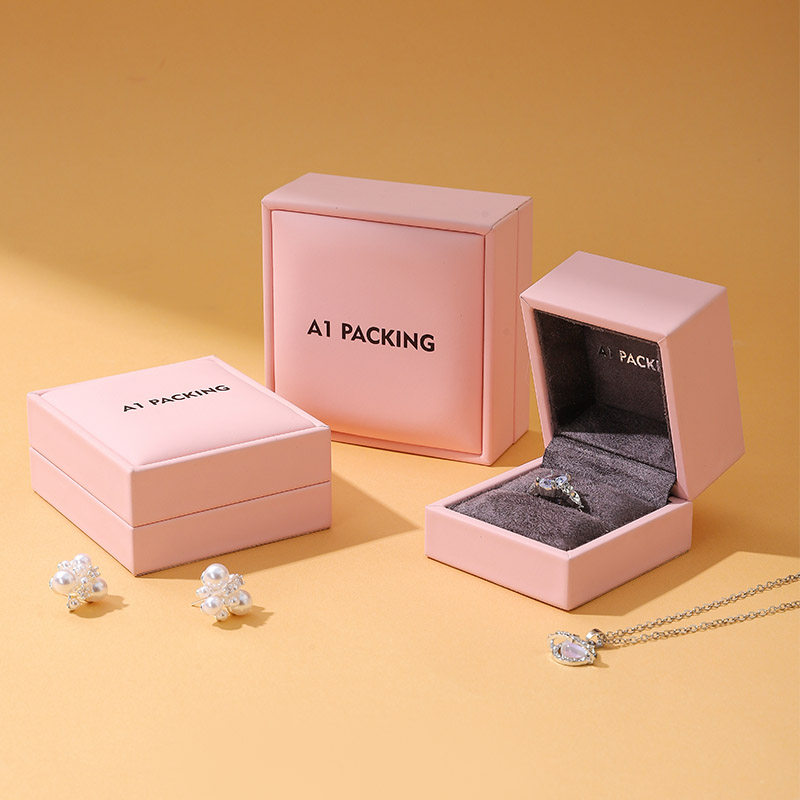
There can also be differences in shipping volume, carton configuration, inserts, finishing, and packaging quality. For this reason, buyers should compare quotations on a like-for-like basis and calculate the total cost of obtaining usable packaging rather than selecting a supplier solely from the smallest unit-price figure.
Choosing MOQ by Business Stage
Smaller Orders for New Product Launches
New jewelry collections usually involve greater demand uncertainty than established products. A brand may have a strong launch plan but still need time to determine which styles, colors, or product sizes will sell consistently. Large volumes of customized jewelry boxes can become difficult to manage when the packaging is tied to a specific collection.
A lower MOQ can give new brands more flexibility during this stage. Although the unit cost may be somewhat higher, the buyer gains the ability to validate market demand before committing additional capital. This can be particularly useful when custom inserts, special colors, or branded finishes make the packaging difficult to repurpose.
Larger Quantities for Established Collections
Established products provide a different purchasing environment. When a jewelry collection has stable sales and the same packaging specification is used repeatedly, a larger order can be planned with greater confidence. Historical sales data makes it easier to estimate how many jewelry packaging boxes will be consumed over a given period.
This is where bulk jewelry boxes can provide stronger cost efficiency. Instead of placing several small orders and repeatedly paying production and shipping costs, buyers can consolidate demand into a larger run. The key is to base the quantity on actual turnover rather than simply choosing the highest MOQ available.
Balancing Inventory and Cash Flow
The Risk of Overstocked Jewelry Packaging
Packaging inventory is easy to overlook because it is not the main product being sold. Yet customized jewelry boxes still represent working capital. If a business holds too many units, that money cannot be used for new inventory, marketing, product development, or other operating expenses.
The risk becomes greater when the packaging carries a collection-specific logo, product name, or color. If the jewelry line changes, the old packaging may have limited use. For this reason, a slightly higher unit cost can sometimes be the more cost-effective choice when it allows the buyer to maintain healthier inventory levels.
The Value of Reorder Flexibility
Reorder flexibility can change the way MOQ should be evaluated. A supplier that supports repeat production can make it easier to start with a manageable quantity and increase the order once sales become predictable. This reduces the pressure to make one large commitment at the beginning.
For buyers with recurring packaging demand, consistent specifications are equally important. When the same materials, dimensions, inserts, and finishes can be reproduced accurately, purchasing becomes easier to forecast. This can also reduce the time required to review every new order from scratch.
Managing Cost Through Packaging Standardization
Using a Shared Outer Structure
Brands with multiple jewelry products do not necessarily need a completely different box for every SKU. A shared outer structure can often be combined with different inserts to accommodate rings, earrings, necklaces, or bracelets.
This approach can reduce design and tooling complexity while maintaining a consistent brand appearance. It also gives buyers more freedom to adjust internal configurations as the product range changes. For bulk jewelry boxes, structural standardization can be an effective way to improve purchasing efficiency without making the packaging look generic.
Prioritizing Custom Features
Customization can add value, but not every option needs to be included in every order. Buyers can focus on the features that directly support brand recognition, such as logo finishing, paper quality, insert material, or closure design.
A premium jewelry packaging box does not need to combine multiple expensive processes to look refined. A carefully selected surface material with a clear logo treatment can create a strong result while keeping the production specification under control. This makes it easier to negotiate both quantity and unit cost.
Comparing Wholesale Jewelry Box Quotations
Build a Like-for-Like Cost Comparison
A useful quotation comparison should include more than unit price and MOQ. Buyers should check box dimensions, board thickness, exterior paper, internal insert, closure, printing, finishing, packaging method, and production terms.
This matters because a supplier quoting a lower figure may simply be offering a different specification. Once all details are standardized, the buyer can identify which supplier provides the more competitive overall package. The comparison should then include expected freight and storage requirements where those costs materially affect the order.
Evaluate the Cost per Usable Box
A useful purchasing metric is not simply “cost per box,” but the cost of obtaining a box that meets the approved specification and can actually be used in the sales process. Defects, incorrect dimensions, damaged finishes, or unsuitable inserts can reduce the practical value of an order.
Quality control therefore belongs in the MOQ discussion. A competitive supplier should be able to reproduce the approved sample consistently across a bulk production run. The lowest initial quotation has limited value if the buyer later needs rework or replacement packaging.
A Practical MOQ Decision Process
Estimate Consumption Before Ordering
Start with expected monthly or quarterly packaging usage rather than starting with the supplier's MOQ. Separate fast-moving products from seasonal or experimental collections, then determine how quickly each category is likely to consume the packaging.
This allows the buyer to compare the MOQ against actual turnover. A quantity that seems large in isolation may be appropriate for a stable collection, while the same quantity may be excessive for a newly launched product with uncertain demand.
Compare Short-Term and Long-Term Costs
The initial order is only one part of the purchasing decision. Buyers should also consider how often the packaging will need to be reordered and whether future orders can use the same specifications.
A slightly higher first-order unit cost may be justified when it reduces excess inventory and gives the business more flexibility. Conversely, a larger order can be more competitive when demand is stable and the packaging is expected to remain unchanged for an extended period.
FAQ
What MOQ is suitable for bulk jewelry boxes?
There is no universal MOQ for every buyer. The suitable quantity depends on sales volume, customization level, inventory capacity, product life cycle, and expected reorder frequency. New collections usually require more cautious purchasing than established products.
Does a higher MOQ always mean a lower total cost?
No. A higher MOQ may reduce the unit price while increasing storage, cash-flow pressure, and the risk of unused customized packaging. Buyers should compare the total purchasing cost rather than the unit price alone.
How can buyers reduce the cost of bulk jewelry boxes?
Buyers can standardize outer structures, control customization, optimize box dimensions, forecast demand, and compare like-for-like quotations. Larger quantities can also improve production efficiency when the packaging has stable demand.
What should buyers ask a jewelry box supplier about MOQ?
Ask about MOQ by size or design, pricing at different quantities, setup charges, repeat-order conditions, customization options, sample approval, production lead time, and whether the same specification can be reproduced consistently.
Once your expected usage and customization requirements are defined, you can Get a Free Quote based on a practical order quantity rather than choosing an MOQ only from the headline unit price.